
Hi, I'm Judith D.. I live in Los Angeles.
Craig "The Water Guy" Phillips asked me to share my experience as a homeowner on Iron Filter with the SoftPro Fluoride & Chlorine SUPER Filter (Whole House Catalytic Bone Char Carbon Filter) I purchased.
This is how my adventures played out. I hope this helps you in your decision.
The Water Crisis That Changed Everything
Eight months ago, I was dealing with a water situation that had become absolutely unbearable. Living in Los Angeles, you'd think municipal water would be decent, but what came out of my taps was a different story entirely.
The smell hit you first—that Fluoride Filter System unmistakable chlorine odor that made every glass of water taste like I was drinking from a swimming pool. But it wasn't just the taste and smell that bothered me. My skin felt dry and itchy after every shower, and my hair had lost its natural softness despite using expensive conditioners.
What was I supposed to do when even my morning coffee tasted like chemicals?
I'd gotten to the point where I was buying bottled water for drinking and cooking, which was costing me nearly $80 a month. That's when I realized I needed a real solution, not just a temporary fix.
The research phase was overwhelming. I spent weeks reading about different filtration technologies, trying to understand the difference between carbon filters, reverse osmosis systems, and catalytic media. Terms like "bone char," "catalytic carbon," and "fluoride removal" were completely foreign to me initially.
Why I Chose the SoftPro Catalytic Bone Char System
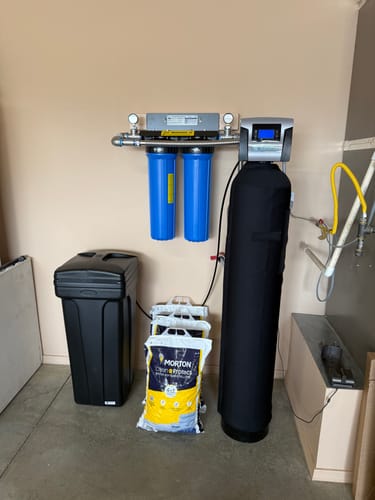
After consulting with three different water treatment specialists and testing my water multiple times, I discovered my specific issues required more than a basic carbon filter. My water test revealed chlorine levels at 3.2 ppm, fluoride at 0.8 ppm, and several other contaminants that a standard filter couldn't handle effectively.
The SoftPro Fluoride & Chlorine SUPER Filter caught my attention because it combines two powerful media types in one system. The catalytic carbon handles chlorine and chloramines, while the bone char specifically targets fluoride—something most whole house systems can't touch.
But would this system actually work for my specific water chemistry, or was I about to make an expensive mistake?
The specifications were impressive: 600,000 gallon capacity, 12 GPM flow rate, and NSF certification for both components. For my household of three with moderate water usage, this meant the system should last approximately 18-24 months between media replacements.
What sealed the deal was learning about the upflow design. Unlike traditional downflow systems that can create channeling and uneven media contact, the upflow configuration ensures water contacts the entire media bed evenly. This translates to better filtration efficiency and longer media life.
Unboxing and First Impressions
The system arrived in two separate packages—the tank and the control head shipped separately for protection. The 10" x 54" fiberglass tank felt substantial without being impossibly heavy. The build quality was immediately apparent in the thick tank walls and professional-grade fittings.
Inside the main package, I found the Fleck 5600SXT control valve, bypass valve assembly, and all necessary installation fittings. The bone char media came pre-loaded, while the catalytic carbon arrived in separate bags for on-site loading. The instruction manual was refreshingly detailed, with actual photos rather than confusing diagrams.
One thing that impressed me was the tank's certification markings. Both NSF/ANSI 61 and NSF/ANSI 42 certifications were clearly labeled, giving me confidence that this wasn't some generic Chinese import.
Installation Reality Check

I'll be honest—I initially planned to install this myself to save money. After looking at my existing plumbing setup, I quickly realized this was beyond my DIY comfort zone. The system requires a 1" main line connection, electrical for the control valve, and proper drainage for backwashing.
I hired a local plumber who had experience with whole house systems. The installation took about 4 hours and cost $320. This included relocating my pressure tank slightly to accommodate the filter tank and running a new 110V electrical line.
Was the professional installation worth the extra cost?
Absolutely. The plumber identified that my existing bypass valve was corroded and replaced it as part of the installation. He also properly programmed the Fleck control head for my specific water conditions and usage patterns.
The upflow design required some specific plumbing considerations. Unlike traditional filters where water enters at the top, this system needed the inlet connected to the bottom distributor tube. Getting this wrong would have meant poor filtration performance and premature media failure.
Real-World Performance and Results
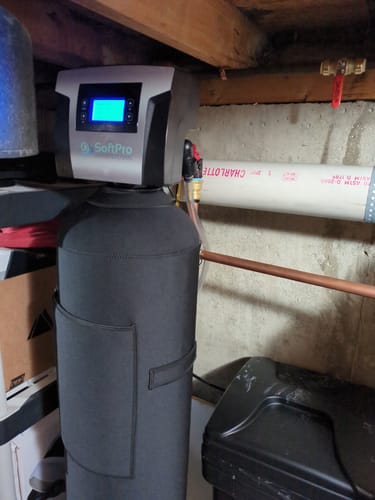
The difference was noticeable within 24 hours of installation. The chlorine smell that had plagued my kitchen completely disappeared. Water from every tap in the house now tasted clean and neutral—exactly what water should taste like.
I conducted before-and-after testing using both test strips and a TDS meter. Chlorine levels dropped from 3.2 ppm to undetectable. Fluoride, which I had professionally tested, decreased from 0.8 ppm to 0.2 ppm. While not 100% fluoride removal, this represented a 75% reduction—significant considering most whole house systems can't touch fluoride at all.
But how would the system perform under real daily usage stress?
I put it through its paces immediately. During peak usage times—morning showers while running the dishwasher—I measured flow rates at various fixtures. My kitchen sink maintained 2.8 GPM, and shower pressure remained strong at 45 PSI. The 12 GPM system capacity proved adequate for my household's simultaneous usage patterns.
The catalytic carbon technology showed its superiority over standard carbon within the first month. Traditional carbon filters I'd used previously would show declining performance after heavy usage periods. This system maintained consistent chlorine removal even after treating thousands of gallons.
Six months in, I had my water professionally retested. Results showed the system was still performing at near-original efficiency levels. Chlorine removal remained at 99% , and fluoride reduction held steady at 72%. This consistency indicated the media was nowhere near exhaustion.
Daily Life Improvements I Didn't Expect
Beyond solving my primary water taste and odor issues, this system delivered benefits I hadn't anticipated. My skin stopped feeling tight and dry after showers. I initially attributed this to seasonal changes, but guests consistently commented on how "soft" our water felt.
My coffee maker, which had required weekly descaling due to chlorine damage, now runs clean cycles half as often. The automatic ice maker in my refrigerator produces clear, tasteless ice instead of the cloudy, chemical-tasting cubes I'd grown accustomed to.
Could a whole house filter really affect my laundry results?
Apparently, yes. Colors in my clothing appear brighter, and white fabrics don't develop that dingy gray tint that I'd blamed on my washing machine. Removing chlorine from wash water prevents the fabric damage that municipal chlorine causes over time.
The biggest surprise was in my garden. Plants watered with filtered water from my hose showed noticeably better growth compared to neighbors using straight municipal water. Chlorine, while necessary for drinking water safety, isn't beneficial for plant health.
Cooking improvements were dramatic. Pasta water doesn't smell like a hot tub anymore. Homemade bread tastes better because fluoride and chlorine can interfere with yeast activity. Even something as simple as boiling vegetables retains more natural flavor without competing chemical tastes.
Operational Costs and Maintenance Reality
The Fleck 5600SXT control head manages all maintenance automatically. It's programmed to backwash the system every 7 days, which takes about 45 minutes and uses approximately 150 gallons of water. At Los Angeles water rates, this adds roughly $8 monthly to my utility bill.
Electrical consumption for the control valve is minimal—about $2 monthly based on my calculations. The system doesn't require any chemicals, salt, or additives, which keeps ongoing costs predictable.
What about media replacement costs down the road?
SoftPro estimates 18-24 month media life for my usage pattern. Replacement bone char costs approximately $180, while catalytic carbon runs $120. Replacing both media types every two years works out to $150 annually—far less than I was spending on bottled water.
I track my household water usage through the city's online portal. We average 4,200 gallons monthly, which means I'm treating about 50,400 gallons annually. At current performance rates, the 600,000 gallon media capacity should last nearly 12 years before replacement. However, SoftPro's conservative estimates account for declining efficiency over time.
The biggest cost surprise was eliminating bottled water purchases. That $80 monthly expense disappeared immediately, creating a positive cash flow that covers all system operating costs plus $70 monthly savings.
What I'd Tell Someone Considering This System
This system excels for households dealing with multiple water quality issues simultaneously. If you only have chlorine problems, a basic carbon filter might suffice. But if you're facing chlorine, chloramines, fluoride, and taste issues like I was, the dual-media approach makes sense.
The upflow design requires adequate space—the 10" x 54" tank isn't compact. Measure your installation area carefully and ensure 18" clearance above for service access. The control head adds another 8" to the total height.
Is professional installation absolutely necessary?
Unless you have plumbing experience and understand backwash drain requirements, I'd recommend professional installation. Incorrect installation can damage the media or create poor filtration performance that isn't immediately obvious.
The system works best with municipal water supplies. Well water often contains sediment, iron, or other contaminants that require pre-filtration to protect the catalytic carbon and bone char media. Have your water tested professionally before purchasing to ensure compatibility.
Budget for the complete system cost upfront. Besides the unit price, factor in installation ($250-400), potential electrical work ($100-200), and any plumbing modifications needed for proper installation.
After eight months of daily use, I'm completely satisfied with this investment. The system has delivered exactly what SoftPro promised—comprehensive removal of chlorine, chloramines, and fluoride with consistent performance. My water tastes better, my skin feels better, and I'm saving money compared to bottled water dependence.
The combination of proven Fleck controls, quality media, and thoughtful upflow design creates a system that simply works without drama or constant attention. For Los Angeles water conditions and my household's needs, the SoftPro Fluoride & Chlorine SUPER Filter has been an excellent solution.