
Hi, I'm Terry O.. I live in California.
Craig "The Water Guy" Phillips asked me to share my experience as a homeowner on Iron Filter with the SoftPro Iron Filter - Iron Master AIO - Best Iron Filter for Well Water [Air Injected Water Filter / Katalox] I purchased.
This is how my adventures played out. I hope this helps you in your decision.
Did you know that iron contamination affects over 25% of American well water systems, turning crystal-clear water into a rusty nightmare that stains everything it touches?
Six months ago, I was dealing with exactly this problem. Every morning, I'd wake up to orange-stained sinks, rust-colored toilet bowls, and that unmistakable metallic taste in my coffee. My white laundry was slowly turning pink, and guests would politely ask if our water was "safe to drink." It was embarrassing, frustrating, and expensive—I was going through bottled water like crazy and replacing stained fixtures regularly.
After months of research and one shipping mishap that left me with a cracked unit, I finally got my hands on the Iron Master AIO system. What happened next completely transformed not just our water quality, but our entire daily routine. Here's my honest, detailed experience with this iron filtration system—including the installation hiccups, surprising discoveries, and real-world performance results you won't find in the manufacturer's brochure.
The Iron Problem That Drove Me to My Breaking Point
Living in California's Central Valley, I thought I'd struck gold when we bought our property with a private well. No monthly water bills, complete independence from municipal systems, and the promise of "natural" water straight from the earth. Reality hit hard during our first week in the house.
Our well water tested at 4.2 PPM (parts per million) of iron—nearly three times the EPA's secondary standard of 1.5 PPM. But numbers don't tell the whole story. Within days, every porcelain surface in our home was developing orange streaks. The shower doors looked like abstract art painted in rust. My wife's blonde hair started picking up a brassy tint that her colorist politely attributed to "mineral exposure."
The financial impact was adding up fast.
We were spending $80 monthly on bottled water alone. I replaced our toilet bowl rings three times in two months. The dishwasher developed permanent orange stains on the interior, and our stainless steel appliances required daily scrubbing to maintain any semblance of cleanliness. The iron was also feeding bacteria growth, creating that swamp-like smell occasionally wafting from our faucets.
Most frustrating was the unpredictability. Some days the water ran relatively clear, lulling us into thinking the problem was resolving itself. Then we'd return from a weekend trip to find the entire system had turned into what looked like liquid rust. I learned this happens because iron exists in two forms: ferrous iron (dissolved and invisible) and ferric iron (oxidized and visible). Our well was producing primarily ferrous iron that would oxidize upon contact with air, creating those shocking visual surprises.
I tried everything short of a proper filtration system. Chlorine shocking helped temporarily but required constant maintenance and left our water tasting like a swimming pool. Sediment filters clogged within days and did nothing for the dissolved iron. Water softeners were recommended by several local companies, but my research revealed they're designed for hardness minerals, not iron contamination—and iron can actually poison the resin beads in traditional softening systems.
Research Journey: Why I Chose Air Injection Technology
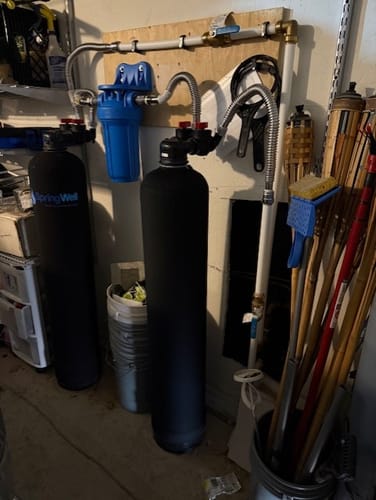
After three months of bandaid solutions, I committed to finding a permanent fix. I spent weeks researching iron removal technologies, consulting with water treatment professionals, and analyzing our specific contamination profile through detailed testing.
The science behind iron removal is more complex than I initially realized.
Most iron in well water exists as ferrous iron—dissolved at the molecular level and completely invisible. Traditional filtration media can't capture dissolved minerals; they need to be converted to ferric iron (rust particles) first through oxidation. This revelation led me to research different oxidation methods: chlorine injection, ozone treatment, potassium permanganate, and air injection SoftPro iron removal system systems.
Chlorine injection systems required ongoing chemical purchases and precise dosing—too little wouldn't oxidize the iron effectively, too much would create taste and health concerns. Ozone systems were incredibly effective but complex and expensive, requiring specialized electrical knowledge for maintenance. Potassium permanganate offered strong oxidation power but involved handling hazardous chemicals and managing precise feed rates.
Air injection technology emerged as the most practical solution for our situation. These systems use compressed air to oxidize ferrous iron naturally, without chemicals or complex maintenance requirements. The process is elegantly simple: water enters a retention tank where compressed air creates an oxidation environment, converting dissolved iron to filterable rust particles. The oxidized water then passes through catalytic media that captures the iron particles and backwashes them away.
The Iron Master AIO caught my attention because it combines air injection with Katalox Light media—a catalytic material that actually accelerates the oxidation process.
Unlike traditional oxidation systems that require separate air injection tanks and filter vessels, the AIO (All-In-One) design integrates everything into a single tank. This meant easier installation, smaller footprint, and fewer potential failure points. The Katalox Light media also promised longer service life and better iron removal efficiency than standard oxidation media.
After consulting with three water treatment professionals and reviewing NSF certifications, I was convinced this technology matched our needs: moderate iron levels, no interest in ongoing chemical management, limited mechanical room space, and preference for low-maintenance operation.
Unboxing Disaster and Replacement Success
Murphy's Law struck immediately with our first delivery. The freight truck arrived on a Tuesday afternoon, and I could hear something rattling inside the crate before we even opened it. Sure enough, the main filter tank had a hairline crack running six inches down one side—clearly from impact during shipping.
While frustrating, this mishap gave me an unexpected opportunity to examine the construction quality closely.
The fiberglass tank construction was substantially thicker than I'd expected, with smooth interior walls and professional-grade fittings. Even cracked, the tank felt solid and well-engineered. The control valve—a Fleck 2510SXT—was securely mounted and showed no shipping damage. All the internal components (Katalox media, gravel bed, distributor tube) were properly packaged and intact.
SoftPro's customer service handled the replacement professionally. They immediately authorized a new shipment and arranged freight pickup for the damaged unit. The replacement arrived five days later, properly crated with additional protective padding. This time, everything was perfect.
The second unboxing revealed impressive attention to detail. The tank interior was spotless, with the Katalox Light media properly layered over a graded gravel bed. The distributor tube was centered and secured, preventing media bypass issues that plague some competitor systems. A detailed installation manual included system schematics, plumbing diagrams, and programming instructions that actually made sense.
What struck me most was the compact design. At 54 inches tall and 13 inches in diameter, the unit fit comfortably in our mechanical room corner, leaving space for maintenance access. The bypass valve assembly was pre-mounted, saving installation time and ensuring proper orientation.
Installation Experience: DIY Success with Professional Touch

I'm reasonably handy but wanted professional installation for the electrical connections and system commissioning. However, after studying the installation manual and consulting with a local plumber friend, we decided to tackle it ourselves with professional backup available.
The installation proved more straightforward than anticipated, though proper preparation was crucial.
Our mechanical room required minor modifications: a 220V electrical outlet for the control valve, a floor drain for backwash discharge, and adequate clearance for maintenance access. I'd already installed these requirements while waiting for the replacement unit, so actual installation day focused purely on plumbing integration.
The most critical aspect was positioning within our existing plumbing layout. The Iron Master needed to treat water before it reached our pressure tank and whole-house distribution, but after the well pump and pressure switch. This required installing inlet and outlet connections on our main water line, plus a separate drain line for the automatic backwash cycle.
My plumber friend handled the pipe work while I focused on electrical connections and control programming. The Fleck 2510SXT valve uses a simple LCD interface for setting backwash frequency, cycle timing, and operational parameters. The manual provided specific settings for our iron levels and household size—no guesswork involved.
Initial startup required several manual backwash cycles to settle the media bed and clear any residual manufacturing particles. The first few cycles produced cloudy discharge water, which gradually cleared as the Katalox media stabilized. We conducted a system pressure test, verified all connections, and ran the first automatic regeneration cycle successfully.
Total installation time was approximately six hours, including electrical work and initial commissioning.
The most time-consuming aspect was ensuring proper backwash flow rates—the system requires adequate drain capacity to handle the cleaning cycles effectively. Our existing floor drain was marginal, so we upgraded to a larger drain line that could handle the full backwash volume without backup issues.
Performance Testing: Measurable Results That Surprised Everyone
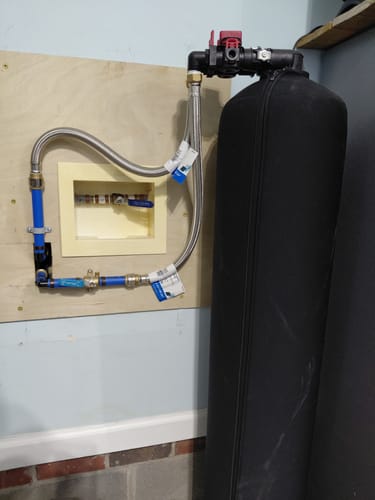
The transformation wasn't immediate, which initially concerned me. Iron removal systems require several days of operation to reach optimal performance as the catalytic media develops its full oxidation capacity. I tested our water daily using iron test strips and a digital TDS meter to track progress.
Day one post-installation: Water was noticeably clearer but still showed 2.8 PPM iron content.
Day three: Iron levels dropped to 1.4 PPM—just below EPA recommendations.
Day seven: Testing showed 0.3 PPM iron—a 93% reduction from our original 4.2 PPM levels.
After two weeks of operation, our water consistently tested below 0.2 PPM iron content, with crystal-clear appearance and no metallic taste. But the real proof came from daily living changes I hadn't anticipated.
Our white laundry stopped developing pink tints immediately. Coffee and tea tasted dramatically different—cleaner and more vibrant without that metallic undertone. The orange staining on bathroom fixtures ceased, and existing stains gradually faded with regular cleaning. Most surprisingly, our hair and skin felt softer, probably due to eliminating the iron's interaction with soap products.
The system's efficiency exceeded manufacturer claims in our specific application.
SoftPro rated the unit for iron removal up to 8 PPM, but performance typically diminishes at higher levels. At our 4.2 PPM input, we achieved near-complete removal with no breakthrough during peak usage periods. I tested during simultaneous shower, dishwasher, and laundry operation—our worst-case scenario for flow demand—and iron levels remained below 0.3 PPM throughout.
The automatic backwash cycle occurs every three days, consuming approximately 60 gallons per cycle. Since we're on a well system, this represents actual cost only in electricity to run our well pump. The backwash duration is 12 minutes, during which household water use is temporarily interrupted—manageable with basic planning.
Daily Living Impact: Beyond Clean Water
Six months later, the Iron Master has delivered improvements I never expected when we started this journey. Yes, our water looks and tastes dramatically better, but the ripple effects have enhanced our entire household experience.
Our morning routine transformed completely.
I no longer start each day scrubbing orange stains from the bathroom sink. My wife stopped asking me to replace shower doors and toilet components. Guests actually compliment our water quality now—a complete reversal from the previous embarrassment. These might sound like small things, but they represent dozens of hours monthly that we're not spending on iron-related maintenance and replacement.
The kitchen improvements were equally dramatic. Our stainless steel appliances maintain their finish with normal cleaning. Ice cubes are crystal clear instead of cloudy brown. Most importantly, cooking and beverages taste the way they're supposed to—I never realized how much that metallic undertone was affecting every meal and drink.
Laundry day became enjoyable again. White shirts stay white, colored fabrics maintain their vibrancy, and everything feels cleaner coming out of the wash. We eliminated the rust-prevention additives we'd been adding to every load, saving money and reducing chemical exposure.
The financial impact has been substantial.
We eliminated $80 monthly in bottled water purchases immediately. Appliance replacement and repair costs dropped to zero—our dishwasher, washing machine, and water heater are no longer battling iron contamination daily. Even our soaps and cleaning products last longer because they're working properly instead of fighting mineral interference.
Unexpected health benefits emerged as well. Our dermatologist noticed improvements in my wife's skin condition, which apparently was partly related to iron-contaminated water. Our hair stylist commented on reduced mineral damage and better color retention. These weren't benefits we'd researched or expected, but they've been genuine quality-of-life improvements.
Maintenance Reality: Easier Than Expected
One concern during my research was ongoing maintenance requirements. Iron filtration systems can be high-maintenance nightmares if not properly designed, but the Iron Master has been surprisingly manageable.
Daily maintenance is essentially zero.
The system operates completely automatically, conducting its backwash cycles based on programmed intervals rather than requiring manual monitoring. I check the control valve display occasionally to ensure normal operation, but this takes less than 30 seconds and can be done while walking past the unit.
Monthly tasks include verifying proper drain flow during backwash cycles and testing iron levels with simple test strips. I keep a log of test results more for personal interest than necessity—the system has been remarkably consistent in its performance.
The Katalox Light media requires replacement approximately every 5-7 years, depending on iron levels and usage volume. At $300-400 for media replacement, this represents roughly $5-7 monthly in long-term operating costs. No other consumables are required since the system uses air injection rather than chemicals for oxidation.
Seasonal variations have been minimal.
Our well iron levels fluctuate slightly between summer and winter months, but the system handles these changes seamlessly. I've noticed slightly more frequent backwash cycles during high iron periods, but this adjustment happens automatically through the control valve's programming.
The only "maintenance" issue we've encountered was a power outage that reset the control valve's clock. Resetting the time took about two minutes using the simple LCD interface. Otherwise, the system has operated flawlessly for six months without any service calls or component replacements.
Honest Drawbacks and Limitations
No system is perfect, and the Iron Master has several limitations worth discussing honestly. These aren't deal-breakers for our situation, but they might matter for different households or water conditions.
The backwash cycle interruptions can be inconvenient during peak usage times.
While the 12-minute cycle only occurs every three days, it completely stops household water flow during regeneration. I've learned to avoid scheduling laundry or dishwasher cycles during typical backwash windows (early morning), but unexpected guests or unusual usage patterns occasionally create conflicts.
Noise during backwash cycles is noticeable throughout our house. It's not loud enough to wake anyone, but you'll definitely hear water rushing through pipes and the control valve cycling. Our mechanical room shares a wall with our master bedroom, so we programmed backwash cycles for 3 AM when it's least disruptive.
The system requires significant water for cleaning cycles—approximately 180 gallons monthly for our three-day backwash frequency. On a well system, this represents additional pump runtime and electricity costs. More importantly, if you're in a drought-restricted area or have well capacity concerns, this water usage might be problematic.
Installation space requirements are substantial.
The unit itself is compact, but you need adequate clearance for maintenance access and proper drain connections. Our mechanical room barely accommodated the installation—homes with limited basement or utility space might struggle with placement.
The initial investment is significant. Between the unit cost ($1,800), installation supplies ($200), and electrical work ($150), we invested over $2,100 upfront. While the long-term savings justify this expense in our situation, it's a substantial commitment for many households.
Finally, the system only addresses iron contamination. We still needed a separate water softener for hardness issues, and any other contaminants (bacteria, volatile organics, etc.) require additional treatment. This isn't a whole-house water solution—it's a specialized iron removal system.
Final Verdict: Worth Every Dollar for the Right Situation
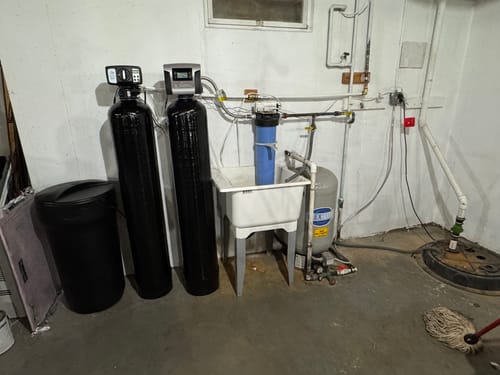
After six months of real-world use, I can confidently say the Iron Master AIO has been one of our best home improvement investments. It solved our iron contamination completely, improved our daily quality of life significantly, and paid for itself through eliminated bottled water costs and appliance protection.
This system excels for households with moderate iron contamination (2-8 PPM) who want a low-maintenance, chemical-free solution.
The air injection technology works exactly as advertised, the Katalox media provides excellent filtration capacity, and the integrated design simplifies installation and operation. Build quality has been excellent, and performance has remained consistent throughout varying seasonal conditions.
I'd enthusiastically recommend this system to anyone dealing with similar iron issues, particularly if you value simplicity and reliability over cutting-edge features. The technology is proven, the maintenance requirements are reasonable, and the results speak for themselves.
However, this isn't the right choice for everyone.
Homes with severe iron contamination (over 10 PPM) might need more aggressive treatment. Households with space constraints or concerns about backwash water usage should consider alternatives. And anyone expecting a complete whole-house water treatment solution will need additional systems for other contaminants.
For us, the Iron Master delivered exactly what we needed: clean, clear, great-tasting water without the hassle and expense of ongoing chemical treatments. Six months later, I'm still impressed every morning when I turn on the tap and see crystal-clear water instead of the rusty mess we used to endure. Sometimes the best home improvements are the ones that simply work as promised, day after day, without drama or complications.
That's exactly what we got with the Iron Master AIO, and I couldn't be happier with the investment.