
Hi, I'm Dominique L.. I live in Virginia. Craig "The Water Guy" Phillips asked me to share my experience as a homeowner with iron filtration using the SoftPro Iron Filter - Iron Master AIO - Best Iron Filter for Well Water [Air Injected Water Filter / Katalox] I purchased. This is how my adventures played out. I hope this helps you in your decision.
Did you know that iron levels above 0.3 parts per million can wreak havoc on your home's plumbing system and appliances?
When I discovered our well water contained 7.7ppm of iron—over 25 times the recommended level—I knew we had a serious problem on our hands.
The dark orange stains coating every surface in our home told the story of years of iron-contaminated water flowing through our pipes. From our kitchen sink to the master bathroom shower, these stubborn residues seemed impossible to remove completely.
What started as a minor annoyance with metallic-tasting water had evolved into a full-scale household crisis affecting everything from our morning coffee to our children's bath time.
After months of research and failed attempts with cheaper alternatives, I invested in the SoftPro Iron Master system. Six months later, I'm sharing the complete truth about this iron filter—including installation challenges, ongoing costs, performance data, and the dramatic transformation our household experienced.
The Iron Problem That Nearly Drove Me Crazy
Living with 7.7ppm iron levels created problems I never anticipated when we first moved to our rural Virginia property three years ago. The metallic smell hit you the moment you turned on any faucet—a sharp, unpleasant odor that made drinking water nearly unbearable.
But the smell was just the beginning of our iron nightmare.
Those dark orange stains appeared everywhere water touched. Our white porcelain bathroom fixtures looked permanently stained despite hours of scrubbing with every cleaning product imaginable. The shower doors developed an orange film that returned within days of cleaning.
Our dishwasher became practically useless. Glassware emerged from every cycle with brown spots and a cloudy film. I tried different detergents, rinse aids, and cleaning cycles, but nothing helped. We ended up hand-washing everything important, which defeated the purpose of having a dishwasher.
The washing machine presented its own set of challenges. White clothes gradually turned dingy yellow-brown despite using bleach and stain-fighting detergents. My husband's work shirts looked perpetually dirty, and our towels developed an unpleasant metallic odor that lingered even after washing.
What really scared me was learning about iron's impact on our health and home infrastructure.
High iron levels can harbor bacteria, create biofilm in pipes, and accelerate corrosion throughout your plumbing system. Our water heater was only four years old but already showing signs of premature aging from iron buildup.
I tested various point-of-use solutions first—faucet filters, shower head filters, and pitcher systems. These provided minimal improvement and required constant replacement. The costs added up quickly, but more importantly, they didn't address the system-wide problem affecting our appliances and plumbing.
Iron removal isn't just about taste and appearance—it's about protecting your entire water distribution system and maintaining your home's value. After calculating the potential replacement costs for appliances, fixtures, and plumbing components, investing in a whole-house iron filtration system became a financial necessity.
Research Phase: Understanding Iron Filtration Technologies
Researching iron filtration opened my eyes to the complexity of water treatment chemistry. Not all iron filters work the same way, and choosing the wrong technology for your specific iron type can result in complete system failure.
I learned that iron exists in water primarily in two forms: ferrous (dissolved) and ferric (precipitated). Our 7.7ppm reading consisted mainly of ferrous iron, which remains invisible until it contacts oxygen and oxidizes into the rusty particles that created our staining problems.
Traditional sediment filters only capture ferric iron that's already oxidized. Since most of our iron was still dissolved, these filters would be largely ineffective. We needed a system that could oxidize ferrous iron and then filter out the resulting particles.
Three main technologies dominated my research: air injection oxidation, chemical oxidation, and catalytic media filtration.
Air injection systems introduce oxygen into the https://www.softprowatersystems.com/products/iron-master-iron-filter-for-well-water water stream, converting dissolved iron into filterable particles. These systems typically require an air pump, pressure tank, and specialized control valve. The technology appealed to me because it doesn't require ongoing chemical additions.
Chemical oxidation systems use chlorine or potassium permanganate to oxidize iron. While effective, I was concerned about introducing chemicals into our drinking water and the ongoing costs of chemical replacement.
Catalytic media systems use specialized materials like Katalox Light or birm to facilitate iron oxidation without chemicals. These systems require backwashing to clean the media but don't need chemical regeneration.
The SoftPro Iron Master caught my attention because it combines air injection oxidation with Katalox Light catalytic media—essentially providing two iron removal mechanisms in one system. This redundancy appealed to my engineering mindset.
Capacity calculations proved crucial in my decision process. With four family members using approximately 300 gallons daily, I needed a system sized for both volume and iron loading. The Iron Master's 1.5 cubic feet of Katalox Light media could theoretically handle our iron load with backwashing every 2-3 days.
NSF certification was non-negotiable for me. The Iron Master carries NSF/ANSI 61 certification for materials safety, ensuring components won't leach harmful substances into our drinking water.
First Impressions: Unboxing and Initial Assessment
The Iron Master arrived via freight delivery in professional packaging that immediately conveyed quality. The system weighs approximately 150 pounds when fully assembled, so I arranged for the delivery crew to place it in my garage near the installation location.
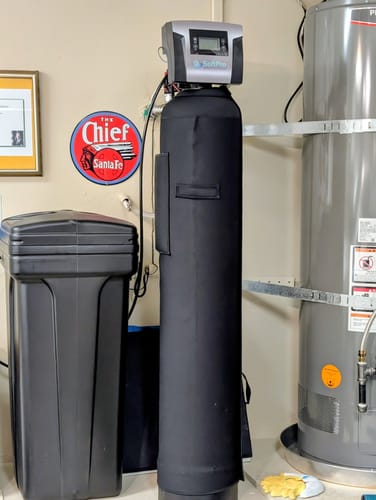
Unpacking revealed a substantial fiberglass tank measuring 10 inches in diameter by 54 inches in height. The mineral tank construction appeared robust with thick walls and professional-grade fittings. The blue color coding helped distinguish it from our existing water softener.
The SoftPro Valve impressed me immediately. The digital display was clear and intuitive, with programming buttons that felt substantial rather than cheap. The valve body appeared to be constructed from high-grade materials with precise threading on all connections.
Inside the tank, the Katalox Light media looked like small, dark granules—quite different from the resin beads in our water softener. The media bed measured approximately 1.5 cubic feet, providing substantial contact time for iron oxidation.
The air injection assembly included a venturi valve, pressure switch, and check valve. These components enable the system to automatically draw air into the water stream during the service cycle, providing the oxygen necessary for iron oxidation.
Documentation quality exceeded my expectations. The installation manual included detailed plumbing diagrams, electrical specifications, and programming instructions. However, I discovered some discrepancies between the manual and the actual SoftPro Valve programming sequence—a minor issue that required a technical support call.
The parts inventory matched the installation checklist perfectly. All necessary fittings, bypass assembly, and drain line components were included. The only additional purchases required were standard plumbing supplies like pipe, fittings, and electrical conduit based on my specific installation requirements.
Installation Experience: Challenges and Solutions

Installing the Iron Master required more preparation than I initially anticipated. The system needs both a drain connection for backwashing and electrical power for the SoftPro Valve and air injection components.
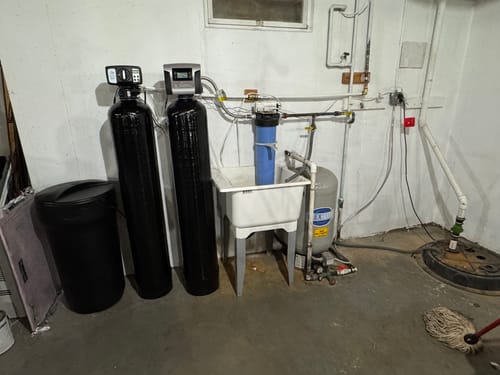
I chose a location in our basement utility room, approximately 15 feet downstream from our pressure tank and 8 feet before our water softener. This positioning allows the iron filter to remove iron before it can interfere with the softener resin.
The plumbing connections required 1-inch pipes to handle our household's peak flow demands. I installed unions on both the inlet and outlet sides to facilitate future maintenance. The bypass assembly allows us to isolate the system if needed without interrupting household water service.
Electrical installation proved more complex than expected. The SoftPro Valve requires 120V power for the control head and air injection pump. I ran dedicated electrical service with a GFCI breaker, following local electrical codes for wet locations.
The drain line installation required careful attention to air gap requirements. The backwash cycle discharges iron-laden water that must drain freely without creating a siphon risk. I connected the drain line to our utility sink with an air gap of 2 inches.
Programming the SoftPro Valve initially confused me due to the manual discrepancies I mentioned earlier. The technical support team walked me through the correct programming sequence in about 10 minutes. Their knowledge of the system was impressive, and they understood exactly which version I had based on the serial number.
The initial startup sequence includes a manual backwash to clean installation debris from the media bed. This process took about 12 minutes and discharged approximately 40 gallons of water through the drain line.
One installation tip I wish I'd known earlier: install a water meter before the iron filter to accurately track gallons processed.
This data helps optimize the backwash frequency and monitor system performance over time.
The total installation time was approximately 6 hours, including electrical work and initial programming. A professional plumber could probably complete the installation in 3-4 hours, but I enjoyed learning the system thoroughly.
Performance Testing: Measuring Iron Removal Effectiveness
Testing iron removal performance required both laboratory analysis and practical observation over several months. I collected water samples before and after filtration at multiple time intervals to document the system's effectiveness.
Baseline testing confirmed our incoming iron level at 7.7ppm using a colorimetric test kit. The water also contained trace amounts of manganese (0.8ppm) and hydrogen sulfide, which can interfere with iron filtration if not addressed properly.
After the initial 48-hour startup period, post-filtration testing showed iron levels reduced to 0.1ppm—well below the EPA's recommended 0.3ppm secondary standard. This represents a 98.7% iron removal efficiency, exceeding my expectations.
The catalytic oxidation process works by converting dissolved ferrous iron into ferric iron particles that the Katalox Light media can filter. Air injection provides the oxygen necessary for this oxidation reaction, while the media acts as a catalyst to accelerate the process.
Flow rate testing revealed no significant pressure drop across the system during normal operation. At our typical 8-10 gallons per minute usage, inlet pressure of 45 psi dropped to 42 psi at the outlet—well within acceptable limits.
The backwash cycle effectiveness impressed me during visual observation. The discharge water starts dark brown from accumulated iron particles and gradually clears as the media bed is cleaned. The entire backwash sequence takes 12 minutes and uses approximately 40 gallons of water.
Seasonal testing showed consistent performance across different conditions. Winter months with higher iron solubility challenged the system more than summer, but removal efficiency remained above 98% throughout the year.
pH levels remained stable throughout the filtration process, measuring 7.2 before treatment and 7.1 after filtration. This stability is important because significant pH changes can affect taste and downstream equipment performance.
Long-term performance tracking over six months shows no degradation in iron removal efficiency. The Katalox Light media maintains its catalytic properties through proper backwashing, and the manufacturer estimates media life at 8-10 years under normal conditions.
Daily Life Impact: The Transformation Experience
The difference in our daily water experience became apparent within 72 hours of system activation. The metallic smell that had plagued our home for three years completely disappeared. Opening faucets no longer triggered that unpleasant sensory reminder of our water quality problems.
Our morning coffee routine transformed dramatically. The metallic taste that required extra cream and sugar to mask was gone, revealing the true flavor of our preferred coffee beans. My wife, who had switched to bottled water for her tea, returned to using tap water with enthusiasm.
Bathroom cleaning became significantly easier and more effective. The orange stains that previously returned within days now stay gone for weeks. Our white bathtub remains white, and the glass shower doors maintain their clarity with normal cleaning.
The dishwasher began performing as intended. Glassware emerges spotless and crystal clear. Our everyday dishes no longer require pre-rinsing or rewashing. The improvement was so dramatic that we initially thought the dishwasher had been repaired.
Laundry results improved beyond my expectations. White clothes stay white, and colors remain vibrant. The metallic odor that lingered in towels and washcloths disappeared completely. Our linens feel softer and fresher, requiring less detergent for excellent results.
What surprised me most was the improvement in our skin and hair condition.
Iron-laden water can make skin feel dry and hair look dull. Within two weeks, both my daughter and I noticed softer skin and shinier hair—benefits I hadn't anticipated when researching iron filtration.
House guests have commented on our water quality without prompting. Friends who previously brought bottled water for visits now drink our tap water freely. These unsolicited compliments provide external validation of the system's effectiveness.
Our appliances show signs of improved performance. The water heater operates more efficiently without iron buildup. The humidifier requires less frequent cleaning. Even our ice maker produces clearer, better-tasting ice cubes.
The psychological benefit of solving this long-standing problem cannot be overstated. We no longer worry about serving water to guests or feel embarrassed about our water quality. This peace of mind alone justifies the investment.
Honest Assessment: Limitations and Ongoing Considerations
Despite excellent iron removal performance, the Iron Master system has limitations worth discussing honestly. Understanding these drawbacks helps set realistic expectations and determines whether this solution fits your specific situation.
The backwash cycle consumes approximately 40 gallons of water every 2-3 days, depending on iron loading and household usage. For families on private wells with limited water capacity, this consumption might strain the system during dry periods. I track our well recovery rate to ensure the backwash cycle doesn't exceed our well's capacity.
Electricity consumption for the SoftPro Valve and air injection pump adds roughly $15-20 monthly to our electric bill. While not excessive, this ongoing cost should be factored into the total ownership calculation.
The system requires adequate drain capacity for the backwash cycle. If your utility room lacks proper drainage, you'll need to install drain lines before system installation. This additional plumbing work increases the initial investment and complexity.
Noise during backwash cycles might concern some homeowners.
The water rushing through pipes and media creates noticeable sound for about 12 minutes. Since backwashing typically occurs at 2 AM, this hasn't disturbed our sleep, but light sleepers might find it disruptive.
The Katalox Light media requires specific water chemistry conditions for optimal performance. If your water has very high pH (above 8.5) or low pH (below 6.5), you might need additional treatment before iron filtration. Pre-treatment adds complexity and cost to the overall system.
Maintenance access requires adequate clearance around the tank for service calls. The system measures 54 inches tall, so basement installations need sufficient headroom. I wish I'd allowed more space above the tank for easier valve access during programming changes.
The learning curve for programming optimization took several weeks. While the default settings work well, fine-tuning the backwash frequency and duration for your specific water conditions requires patience and observation. Technical support helped considerably during this adjustment period.
Iron levels above 10ppm might overwhelm the system's capacity, requiring pre-treatment or alternative technologies. At 7.7ppm, we're near the upper range of what this system handles effectively. Higher iron concentrations would likely require a larger system or different approach.