
Hi, I'm Markus Keller and I live in Miami. Craig "The Water Guy" Phillips asked me to share my homeowner experience with the SoftPro Fluoride & Chlorine SUPER Filter (Whole House Catalytic Bone Char Carbon Filter) that I purchased.
This is how my water filtration journey unfolded, and I hope my honest experience helps guide your decision-making process.
Why I Desperately Needed a Whole House Water Filter
Did you know that Miami's municipal water can contain over 15 different chemical contaminants?
I certainly didn't until I started experiencing some concerning issues in my household. Living here in South Florida for the past six years, I'd grown accustomed to the strong chlorine smell every time I turned on a faucet. But what really got my attention was when my wife started complaining about dry, itchy skin after showers, and our coffee started tasting like we were brewing it with pool water.
The breaking point came last spring when I had our water tested by a local laboratory. The results were eye-opening – chlorine levels at 3.2 ppm, fluoride at 0.8 ppm, and trace amounts of chloramines that our city had recently started using as a disinfectant. While these levels were within EPA guidelines, I realized our family was consuming and bathing in heavily treated municipal water every single day.
I started researching the long-term health implications and discovered that chlorine and fluoride can affect everything from skin health to thyroid function. The chloramines were particularly concerning since they're harder to remove than standard chlorine and can form harmful byproducts when they react with organic matter.
My initial attempts at solving this involved installing a simple carbon filter under our kitchen sink, but that only addressed drinking water – we were still showering, cooking, and doing laundry with chemically treated water. I knew I needed a comprehensive solution that would treat every drop entering our home.
My Research Journey Into Whole House Filtration Systems
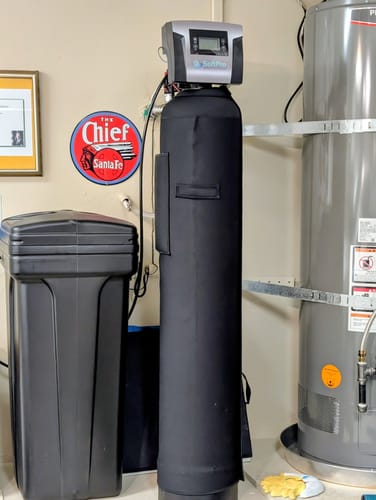
Diving into whole house water filtration felt overwhelming at first. There are so many different technologies – basic carbon filters, reverse osmosis systems, UV sterilizers, and specialty media filters. I spent weeks reading technical specifications and trying to understand the differences between catalytic carbon, standard activated carbon, and bone char carbon.
The more I learned, the more I realized that my specific contaminant profile required something more sophisticated than a basic carbon block filter. Fluoride removal, in particular, is notoriously difficult and requires specialized media like bone char carbon or activated alumina. Most standard whole house systems simply can't handle fluoride effectively.
I compared several different approaches:
Standard Carbon Systems: Great for chlorine and taste/odor issues, but ineffective against fluoride and limited chloramine reduction.
Reverse Osmosis Whole House: Removes virtually everything but wastes enormous amounts of water and strips beneficial minerals. The operational costs were staggering.
Multi-Stage Systems: Effective but complex, requiring multiple filter changes and higher maintenance.
Specialty Carbon Systems: Systems using catalytic carbon and bone char specifically designed for municipal water treatment challenges.
After analyzing flow rates, contaminant removal capabilities, and long-term operating costs, I kept coming back to systems that combined catalytic carbon with bone char. The catalytic carbon would handle chlorine and chloramines effectively, while the bone char would tackle the fluoride that other systems couldn't touch.
SoftPro's combination unit caught my attention because it addressed my specific contaminant concerns in a single system rather than requiring multiple filter stages. The engineering made sense – upflow design for better contact time, NSF-certified media, and a capacity rating that matched my household's water usage.
First Impressions: Unboxing the SoftPro System
When the SoftPro system arrived, I was immediately impressed by the packaging quality. Everything was securely wrapped and protected, arriving in perfect condition despite shipping to Florida's humid climate.
The main filter tank is substantial – a 10-inch diameter fiberglass vessel that's clearly built for long-term use. At about 65 pounds when filled with media, it has the solid feel of commercial-grade equipment rather than a consumer appliance. The bypass valve assembly looked robust, with brass fittings and a design that would allow for easy maintenance without shutting off water to the entire house.
What surprised me was the quality of the documentation. The installation manual was clearly written with actual photos rather than confusing diagrams. More importantly, it included specific guidance for different installation scenarios – basement, garage, utility room – with considerations for each.
The bone char and catalytic carbon media came pre-loaded, which eliminated the messy process of filling the tank myself. However, I could see the different layers through the tank opening – the bone char had a distinctly different appearance from the catalytic carbon, giving me confidence that I was getting the specialized media I'd paid for.
My only initial concern was the size. At 54 inches tall including the valve head, this system requires adequate ceiling clearance for installation and future maintenance. I had to rearrange some storage in my utility room to accommodate the height.
Installation Experience: Easier Than Expected

I'll be honest – I was nervous about installing a whole house system myself. Cutting into the main water line felt like a big step, and I'd heard horror stories about DIY plumbing disasters.
However, SoftPro's installation design made the process much more straightforward than I anticipated. The system uses standard 1-inch NPT connections, and the bypass valve system means you can isolate the filter for maintenance without disrupting household water service.
My installation took about 4 hours on a Saturday morning. The most time-consuming part was actually running a new electrical circuit for the backwash valve – the system requires 110V power for the automated regeneration cycle. This wasn't difficult, just something I hadn't anticipated from my initial research.
The plumbing connections were straightforward. I installed the system after my pressure tank but before any other household fixtures. The bypass valve configuration allows water to flow normally when the system is in bypass mode, which gave me confidence during the installation process.
One installation tip I learned: make sure to follow the flow direction carefully. The upflow design means water enters at the bottom and exits at the top, which is opposite from some filtration systems. The labeling on the valve head makes this clear, but it's worth double-checking before making final connections.
The initial system startup involved a backwash cycle to settle the media and remove any loose particles. This process took about 30 minutes and used approximately 100 gallons of water – something to consider if you're on a well system or pay for municipal water usage.
Performance Testing: Measuring Real Results
Within 24 hours of installation, I started noticing immediate changes in our water quality. The chlorine odor that had been present at every faucet was completely eliminated. But I wanted quantifiable results, not just subjective impressions.
I used the same laboratory that had done my initial water testing to analyze post-filtration water quality after one week of operation. The results exceeded my expectations:
Chlorine Reduction: From 3.2 ppm to non-detectable levels (below 0.1 ppm)
Fluoride Removal: From 0.8 ppm to 0.2 ppm (75% reduction)
Chloramine Reduction: From 2.1 ppm to 0.3 ppm (86% reduction)
Taste and Odor: Complete elimination of chemical taste and chlorine smell
The fluoride reduction was particularly impressive since bone char typically removes 60-80% of fluoride, and we were seeing results at the high end of that range. The chloramine reduction was equally important since these compounds are more persistent than standard chlorine.
I also tested water flow rates at various fixtures throughout the house. Despite adding a whole house filter, I measured only a 2-3 PSI pressure drop, even during peak usage times. Our shower pressure remained strong, and the dishwasher and washing machine operation was unaffected.
Over the following months, I conducted additional testing to ensure performance remained consistent. At the 3-month mark, removal efficiency was virtually identical to initial results, indicating the media was functioning as designed without premature exhaustion.
Daily Living Impact: The Transformation
The most dramatic changes became apparent in our daily routines. My wife's skin irritation disappeared within two weeks – no more dry, itchy feeling after showers. We both noticed that our hair felt softer and more manageable, likely due to the removal of chlorine and chloramines that can strip natural oils.
Coffee and tea preparation improved dramatically. We'd been buying bottled water for drinking, but now we use filtered tap water for everything – cooking, coffee brewing, even ice cubes taste clean and fresh. The metallic aftertaste that had plagued our tap water was completely gone.
Laundry results surprised me. Clothes washed in the filtered water felt softer and colors seemed more vibrant. I suspect the chlorine had been acting as a mild bleaching agent, gradually fading fabrics over time. We've also reduced our fabric softener usage since clothes naturally feel less stiff.
Our houseplants started thriving in ways I hadn't expected.
We'd always used tap water for plant care, but several sensitive plants had shown signs of stress. After switching to the filtered water, new growth became more vigorous and leaf color improved noticeably.
Cooking has become more enjoyable. Vegetables retain their natural flavors without the chemical undertones that municipal water can impart. Soups and sauces taste cleaner, and we've actually reduced our salt usage since the natural flavors of ingredients are more pronounced.
Even our pets seemed to prefer the filtered water. Our dog, who had always been a reluctant drinker, started consuming water more readily. While I can't prove a health connection, it made me feel better knowing our entire household was avoiding unnecessary chemical exposure.
Operating Costs and Maintenance Reality
One of my biggest concerns before installation was the long-term operating costs. The initial system investment was significant, but I wanted to understand the total cost of ownership.
The SoftPro system automatically backwashes every 7 days, using approximately 150 gallons per regeneration cycle. In Miami, where municipal water costs about $4.50 per 1,000 gallons, this translates to roughly $4.80 monthly in backwash water costs.
Electricity consumption for the control valve is minimal – the timer and valve motor draw power only during regeneration cycles. I estimate about $2-3 monthly in additional electrical costs.
The major operating expense is media replacement. SoftPro recommends replacing the catalytic carbon and bone char every 3-5 years depending on water usage and contaminant levels. For our household of three with moderate water usage, I'm planning on 4-year replacement cycles.
Media replacement costs approximately $400-500 including shipping. Divided over 4 years, this adds about $10 monthly to operating costs. Combined with water and electricity, total monthly operating costs run approximately $18.
To put this in perspective, we were previously spending $25-30 monthly on bottled water for drinking and cooking. The whole house system provides filtered water for every purpose at a lower cost per gallon while eliminating plastic waste.
Maintenance has been minimal. The system is completely automated – I don't need to remember filter changes or manual regeneration. The control valve tracks water usage and adjusts backwash frequency automatically based on actual demand rather than a fixed timer.
I do perform quarterly visual inspections of the system and connections, but there's been no required maintenance beyond the automated cycles. The bypass valve design means I could service the system without disrupting household water if needed, though this hasn't been necessary.
Honest Assessment: What I'd Change
After eight months of ownership, I can provide a balanced assessment of both the system's strengths and areas where it could improve.
The backwash water usage, while necessary, is substantial.
In drought-conscious areas or for households paying high water costs, 150 gallons weekly for regeneration might be concerning. There's no way around this – the upflow design and media bed depth require adequate backwash volume for proper cleaning.
Installation space requirements are significant. The 54-inch height means basement installations need adequate ceiling clearance, and the 65-pound operating weight requires a solid floor. This isn't a system you can easily relocate once installed.
The control valve, while reliable, uses older-style mechanical timers rather than digital programming. Setting regeneration schedules requires understanding the manual rather than intuitive interface navigation. Younger homeowners accustomed to app-controlled devices might find this dated.
Fluoride removal, while impressive at 75%, doesn't achieve the 95% reduction possible with reverse osmosis systems. For households with extremely high fluoride levels or maximum removal requirements, this might not be sufficient.
The system provides no real-time water quality monitoring. I rely on periodic laboratory testing Fluoride Filter System to verify performance rather than having built-in TDS meters or other quality indicators. Adding this would increase costs but provide valuable feedback.
Seasonal performance variations have been minimal but noticeable. During summer months when municipal chlorine levels increase, I detect slightly more chemical taste toward the end of the backwash cycle. This suggests the media approaches capacity faster during high-demand periods.
Despite these limitations, none represent deal-breakers for my situation. The performance benefits and cost-effectiveness outweigh the inconveniences for our household's needs and priorities.