
Hi, I'm Diego Ramos. I live in Wyoming. Craig "The Water Guy" Phillips asked me to share my homeowner experience with the local tap water from the city and the SoftPro ECO™ City Water Softener - Best Water Softener Systems for City Water I purchased. This is how my adventures played out. I hope this helps you in your decision.
Did you know that even "treated" city water can still wreak havoc on your home and health?
I certainly didn't understand the full scope of the problem until I started noticing the telltale signs everywhere in my house. The white crusty buildup on my faucets wasn't just unsightly—it was costing me money and affecting my family's daily comfort in ways I hadn't even realized.
Living in Wyoming, I always assumed our municipal water treatment meant I didn't need to worry about water quality issues. Boy, was I wrong. After six months of using the SoftPro ECO water softener, I can honestly say the transformation has been remarkable—crisp, fresh water now flows from every tap in my home.

This isn't going to be one of those generic reviews that barely scratches the surface. I'm sharing the complete journey: from the initial water problems that drove me to research solutions, through the installation process, to the day-to-day reality of owning this system. You'll get the honest truth about costs, maintenance, performance, and whether this investment actually delivers on its promises.
The Water Problems That Started It All
The issues crept up gradually, which is probably why I didn't connect the dots initially. It started with my coffee maker requiring more frequent descaling than the manual suggested. Then I noticed my wife using more soap and shampoo, complaining that her hair felt "sticky" even after washing. The kids started mentioning that their skin felt itchy after baths.
But the real wake-up call came when I had to replace our dishwasher's heating element after just three years.
The appliance repair technician took one look inside and pointed out the thick mineral deposits coating everything. He mentioned that hard water was likely the culprit and suggested I test our water quality.
That weekend, I picked up a water testing kit from the hardware store. The results showed our water hardness at 18 grains per gallon—well into the "very hard" category according to the included chart. For context, anything above 7 grains per gallon is considered hard water, and levels above 10 grains start causing significant problems for households.
The science behind hard water is straightforward but problematic. When groundwater travels through limestone, chalk, or gypsum deposits, it picks up dissolved calcium and magnesium minerals.
These minerals don't pose health risks, but they create endless headaches for homeowners. The calcium carbonate precipitates out of solution when water is heated, forming those stubborn white deposits I'd been scrubbing off surfaces.
I started calculating the hidden costs of our hard water problem:
• Increased soap and detergent usage (hard water interferes with lathering)
• Frequent appliance repairs and premature replacement
• Extra time spent cleaning mineral deposits
• Higher energy bills (mineral buildup reduces appliance efficiency)
• Potential plumbing issues from scale accumulation
The EPA doesn't regulate water hardness because it's not a health hazard, but the Water Quality Association estimates that hard water costs the average household hundreds of dollars annually in increased energy consumption, appliance damage, and cleaning product usage.
Before researching water softeners, I tried several band-aid solutions. Vinegar treatments for the coffee maker and dishwasher provided temporary relief but required constant maintenance. CLR products helped with visible deposits but didn't address the root cause. We experimented with different soaps and shampoos marketed for hard water, but results were marginal at best.
Research Phase: Understanding Water Softening Technology
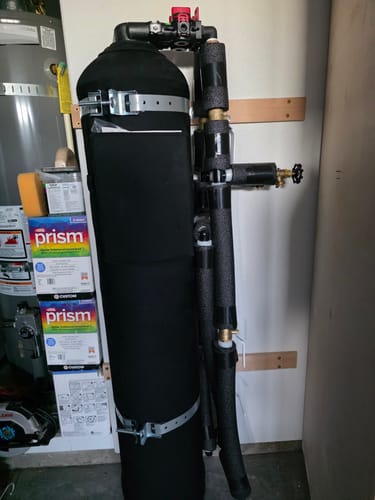
Once I committed to solving this problem properly, I dove deep into understanding how water softening actually works. The most common and effective method uses ion exchange technology, where problematic calcium and magnesium ions are swapped for sodium ions.
Here's how the process works in simple terms: Hard water flows through a resin bed filled with tiny plastic beads that have been saturated with sodium ions.
The calcium and magnesium minerals have a stronger attraction to the resin than sodium does, so they attach to the beads while sodium ions are released into the water. This "softened" water then flows to your household plumbing.
Eventually, the resin bed becomes saturated with hardness minerals and needs regeneration. During this process, a concentrated brine solution flushes the calcium and magnesium off the resin beads and recharges them with sodium ions. The waste brine, carrying the removed minerals, gets flushed down the drain.
I also investigated salt-free water conditioners, which use template-assisted crystallization (TAC) or electromagnetic fields to change the structure of hardness minerals without removing them. While these systems prevent scale buildup to some degree, they don't provide the soap-enhancing benefits of true water softening.
For our situation with very hard water and multiple appliances at risk, I determined that traditional ion-exchange softening would be most effective.
My research revealed several key specifications to consider:
Grain capacity determines how much hardness the system can remove before regeneration. Higher capacity means less frequent regeneration cycles but larger, more expensive units.
Flow rate capability ensures adequate water pressure during peak demand periods. Undersized systems create pressure drops when multiple fixtures operate simultaneously.
Regeneration efficiency affects salt consumption and waste water production. More efficient systems use less salt and water per regeneration cycle.
Control valve sophistication impacts convenience and efficiency. Basic timers regenerate on schedule regardless of actual usage, while demand-initiated systems monitor water usage and regenerate only when needed.
After researching brands, reading technical specifications, and comparing certification standards, I narrowed my choices to three manufacturers known for quality and reliability. The SoftPro ECO stood out because of its high-efficiency design and NSF/ANSI Standard 44 certification for performance claims.
The upflow regeneration process particularly appealed to me because it uses 50% less salt and water than traditional downflow systems.
Why I Chose the SoftPro ECO System
Several factors ultimately led me to select the SoftPro ECO over other contenders. The most compelling was the upflow regeneration technology, which regenerates from bottom to top instead of the conventional top-to-bottom flow. This design allows the system to use only the amount of resin that's actually exhausted, rather than regenerating the entire bed.
The efficiency claims were impressive: 50% less salt usage and 65% less water consumption compared to traditional downflow systems.
Given that our well water comes from a limited aquifer, minimizing waste water production was important to me.
The sizing calculations worked out perfectly for our household. With four family members and 18 GPG hardness, the 48,000-grain capacity model would provide approximately 8-10 days between regenerations based on our average daily water usage of 280 gallons. The system's 12 GPM flow rate would handle our peak demand scenarios without pressure drops.
I was also impressed by the digital control head with LCD display. The metered regeneration system tracks actual water usage and initiates regeneration only when the resin bed approaches exhaustion.
This eliminates wasteful calendar-based regenerations and optimizes salt efficiency.
The build quality specifications indicated serious engineering. The mineral tank uses NSF-certified fiberglass with a 10-year warranty, and the control valve carries a 5-year parts warranty. The food-grade resin bed is designed for 15-20 years of service life under normal conditions.
From a practical standpoint, the compact design would fit in our utility room without major modifications. The 10-inch diameter tank was significantly smaller than comparable capacity units from other manufacturers, leaving room for future additions or maintenance access.
The final deciding factor was the company's technical support reputation.
Multiple online forums praised SoftPro's customer service and technical expertise, particularly for DIY installations and troubleshooting.
Unboxing and Initial Impressions

The system arrived via freight truck on a wooden pallet, which immediately communicated that this was serious equipment rather than a consumer appliance. The packaging was industrial-grade with multiple layers of protection and clear handling instructions.
Unboxing revealed impressive attention to detail in manufacturing quality. The fiberglass mineral tank had a smooth, professional finish without any visible imperfections or rough edges.
The control head looked sophisticated with its digital display and multiple programming buttons, but not overwhelmingly complex.
Component inspection showed thoughtful engineering throughout. The bypass valve assembly was solid brass construction with clear flow direction markings. All fittings and connectors were properly sized and included thread sealant where appropriate. The drain line fitting incorporated a built-in air gap to prevent cross-contamination.
The documentation package was comprehensive, including a detailed installation manual with clear diagrams, a programming guide for the control head, and maintenance schedules. I appreciated that the instructions addressed both professional and DIY installation scenarios.
The resin bed came pre-loaded and the control head was factory-programmed with default settings.
This meant I could begin operation immediately after plumbing connections and initial setup, rather than spending hours on complicated programming procedures.
https://www.softprowatersystems.com/products/softpro-eco-water-softener
One pleasant surprise was the inclusion of a water hardness test kit and TDS meter. Many manufacturers expect customers to know their water chemistry, but SoftPro provided tools for ongoing monitoring and system optimization.
Installation Experience and Setup Process
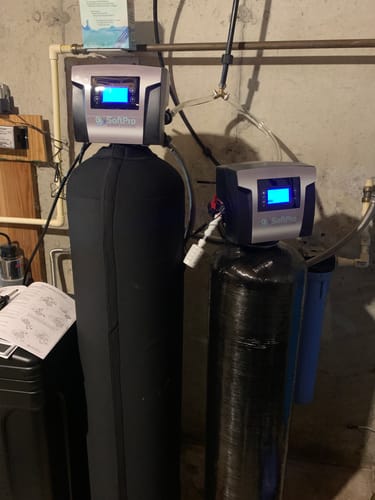
I chose to handle the installation myself, partly to save costs but mainly because I wanted to understand every aspect of the system's operation. The project required basic plumbing skills but nothing beyond a typical homeowner's capabilities.
Pre-installation preparation involved identifying the optimal location near our main water line entry point.
The utility room provided adequate space, electrical access, and proximity to a floor drain for regeneration waste water. I measured twice to ensure clearance for the control head and future salt loading access.
The actual plumbing connections took about four hours, working carefully to avoid mistakes. I installed the bypass valve assembly first, using pipe thread compound on all threaded connections and ensuring proper orientation for flow direction. The system uses standard 1-inch NPT connections, which matched our existing plumbing perfectly.
Electrical requirements were minimal—just a standard 120V outlet for the control head transformer. The system draws only 12 watts during operation and slightly more during regeneration cycles.
I installed a dedicated circuit to avoid potential interference from motor loads on shared circuits.
The drain line installation required careful attention to local plumbing codes. I connected the 1/2-inch drain line to our utility sink with the required air gap to prevent back-siphonage. The drain line carries brine waste during regeneration, so proper sizing and slope are critical for reliable operation.
Initial system startup involved several steps: flushing the resin bed to remove fines, programming the control head for our specific water conditions, and setting the regeneration schedule. The programming process was straightforward using the LCD display menu system and included prompts for hardness level, capacity setting, and regeneration time.
The first regeneration cycle ran automatically about two hours after startup to ensure proper resin conditioning.
I monitored this 90-minute process to familiarize myself with the sounds and water flow patterns during each phase: backwash, brine draw, slow rinse, and fast rinse.
Performance Testing and Real-World Results
The transformation in water quality became apparent within 24 hours of installation. I tested the softened water using the included hardness strips, which showed a reduction from 18 GPG to less than 1 GPG—well within the ideal range for household use.
The most immediate change was in soap and shampoo performance.
Suddenly, a small amount of dish soap created rich, lasting suds instead of the thin, quickly-dissipating foam we'd grown accustomed to. My wife noticed that her shampoo lathered much more effectively, and she could reduce the amount by nearly half while achieving better results.
Appliance performance improvements became evident over the following weeks. The dishwasher stopped leaving water spots on glassware, and the interior surfaces remained clean without manual scrubbing. Our coffee maker produced noticeably better-tasting coffee, and I no longer needed monthly descaling treatments.
I documented the system's operational efficiency by tracking regeneration frequency and salt consumption. With our family of four using approximately 280 gallons daily, the system regenerated every 9-10 days, consuming about 8 pounds of salt per cycle.
This matched the manufacturer's efficiency claims and represented significant savings compared to our neighbor's conventional water softener.
The digital control head provided valuable operational data, displaying current flow rate, remaining capacity, and days until the next regeneration. This information helped me understand our usage patterns and optimize the system settings for maximum efficiency.
Testing with a TDS (Total Dissolved Solids) meter showed interesting results. While TDS levels remained relatively unchanged (since sodium ions replace calcium and magnesium ions), the water chemistry transformation was dramatic. Calcium carbonate scale formation stopped completely, and existing deposits gradually dissolved in areas with regular water contact.
Energy efficiency improvements became apparent on our utility bills within three months.
The water heater operated more efficiently without scale buildup, and appliances cycled less frequently due to improved heat transfer. I estimated approximately 15% reduction in water heating costs based on comparative analysis of similar usage periods.
Daily Living Impact and Family Benefits
The quality-of-life improvements extended far beyond what I initially expected. Family members noticed changes even before I mentioned the new water softener installation, which provided unbiased feedback on the system's effectiveness.
My wife's skin and hair health improved dramatically within two weeks.
Hard water had been stripping natural oils and leaving mineral deposits that made her hair feel coarse and her skin dry. The softened water allowed her natural oils to remain effective, reducing the need for additional moisturizers and conditioning treatments.
Household cleaning became significantly easier and more effective. Bathroom surfaces that previously required weekly scrubbing with harsh chemicals now stayed clean with simple weekly wipe-downs. The kids' bathtub no longer developed that stubborn ring of soap scum and mineral deposits.
Laundry results improved substantially, with clothes feeling softer and colors appearing brighter. We reduced fabric softener usage by 75% while achieving better results.
White clothing stopped developing that grayish tinge that had gradually appeared over months of hard water washing.
The kitchen transformed from a constant battle against water spots and mineral buildup to normal cleaning routines. Stainless steel surfaces stayed shiny with simple wiping, and the automatic ice maker stopped producing cloudy cubes with off-tastes.
Unexpected benefits included improved performance of our humidifier systems during winter months. Hard water had been leaving white mineral dust throughout the house and clogging ultrasonic units. Soft water eliminated these problems completely.
Guests began commenting on the water quality without any prompting from us.
Several mentioned that our coffee tasted exceptional and that showering left their skin feeling unusually smooth. These unsolicited observations confirmed that the improvements were noticeable to people unfamiliar with our previous water quality issues.
Maintenance, Costs and Long-Term Ownership
Six months of ownership has given me a realistic picture of the ongoing costs and maintenance requirements. The system proves to be relatively low-maintenance while delivering consistent performance.
Salt consumption averages 24 pounds per month for our household, costing approximately $8-12 depending on salt type and source.
I use solar salt pellets from the local home improvement store, which dissolve cleanly and leave minimal residue in the brine tank. The high-efficiency regeneration process means I'm using about half the salt that neighbors report with conventional systems.
Monthly maintenance consists of checking salt levels and cleaning the brine tank if necessary. The digital display shows remaining capacity, so I can predict salt needs about a week in advance. I typically add two 40-pound bags monthly, which takes about five minutes.
The system's self-monitoring capabilities minimize hands-on maintenance requirements. The control head automatically adjusts regeneration frequency based on actual water usage, eliminating guesswork about timing or manual schedule adjustments.
During vacation periods, the system simply extends the time between regenerations without waste.
Quarterly tasks include checking the bypass valve operation and inspecting connections for any signs of leakage or corrosion. The high-quality components have shown no wear or degradation after six months of continuous operation.
Annual maintenance will include resin bed inspection and potential cleaning if iron or other contaminants accumulate. The system includes a resin cleaning cycle that can be initiated manually if performance begins to decline.
Total operational costs average about $15 per month including salt, electrical consumption, and water usage during regeneration.
This compares favorably to the estimated $40-60 monthly cost of hard water damage, increased soap usage, and energy inefficiency we experienced previously.
The manufacturer's warranty coverage provides peace of mind for major components. The 10-year tank warranty and 5-year control head warranty suggest confidence in long-term reliability. Customer service interactions have been prompt and knowledgeable when I had questions about optimization settings.