
Hi, I'm Gary A.. I live in Arizona.
Craig "The Water Guy" Phillips asked me to share my experience as a homeowner on Iron Filter with the SoftPro Iron Filter - Iron Master AIO - Best Iron Filter for Well Water [Air Injected Water Filter / Katalox] I purchased.
This is how my adventures played out. I hope this helps you in your decision.
Did you know that iron concentrations above 0.3 parts per million can turn your water rusty orange and leave stains on everything it touches?
Well, I didn't realize just how severe my iron problem was until I tested my well water and discovered we were dealing with a staggering 14 PPM – nearly 47 times the recommended level. Living here in Arizona, our well water has always been a challenge, but the iron content was making daily life increasingly frustrating.
For years, my family endured the telltale signs of excessive iron contamination. Our toilets, sinks, and bathtubs were constantly stained with that unmistakable reddish-brown discoloration. My wife's white laundry came out looking dingy and rust-spotted, no matter what detergent we used. The metallic taste in our drinking water was so pronounced that we'd switched to bottled water for cooking and beverages.
But the real breaking point came when our dishwasher started leaving orange spots on our glassware, and our coffee maker began producing this awful, metallic-tasting brew that was barely drinkable. I knew we needed a serious solution, not just another bandaid fix.
The Iron Contamination Challenge That Pushed Me to Find a Solution
Living with 14 PPM iron in our well water felt like fighting a losing battle every single day. To put this in perspective, the EPA's secondary drinking water standard recommends iron levels below 0.3 PPM for aesthetic reasons. We were dealing with iron concentrations that were literally off the charts for residential water systems.
The science behind our problem was actually quite straightforward, though the solution proved more complex. Our well water contained primarily ferrous iron – the dissolved, "clear water" iron that you can't see until it oxidizes upon contact with air. Once exposed to oxygen, this ferrous iron converts to ferric iron, creating those notorious rust-colored stains and that metallic taste we'd grown to despise.
The financial impact was becoming impossible to ignore. We were spending roughly $80 monthly on bottled water for drinking and cooking. Our appliances were suffering accelerated wear – the water heater elements needed replacement twice in three years, and our dishwasher's spray arms kept clogging with iron buildup. The iron was also feeding bacteria growth in our plumbing system, creating additional biofilm issues that required periodic shocking with chlorine bleach.
Our previous attempt at solving this involved installing two separate iron filters in series – a setup that cost us nearly $3,200 and still left us with noticeable iron breakthrough during high-demand periods. Worse yet, the dual-filter system created such significant pressure drop that our upstairs shower barely produced adequate flow during peak usage times.
I'd researched the technical aspects extensively and learned that effective iron removal at our concentration levels requires oxidation of the ferrous iron followed by filtration of the resulting precipitate. The challenge was finding a single system that could handle both processes efficiently without compromising our household's water pressure or requiring excessive maintenance.
Research Journey: Finding the Right Technology for Extreme Iron Levels
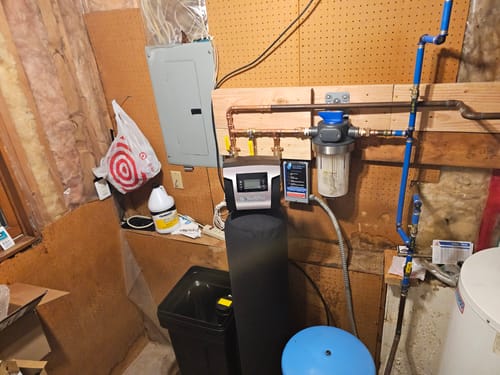
After living with inadequate iron filtration for three years, I was determined to find a permanent solution that could handle our extreme 14 PPM iron concentration. My research focused on understanding the different iron removal technologies available and their effectiveness at high contamination levels.
I spent weeks studying air injection systems versus traditional oxidation methods. Air injection technology appealed to me because it doesn't require chemical oxidants like potassium permanganate or chlorine injection systems. The process works by introducing compressed air into the water stream, oxidizing ferrous iron to ferric iron, which then gets trapped in the filtration media.
The Katalox filtration media was a key decision factor. Unlike traditional greensand or birm media, Katalox is a catalytic media that actually accelerates the oxidation process while providing superior filtration capacity. With a service life of 10-15 years and backwash efficiency that doesn't require potassium permanganate regeneration, it offered the low-maintenance operation I needed.
Sizing calculations were critical given our household's water usage patterns. With four family members and peak demand scenarios involving simultaneous showers and appliance usage, I needed a system capable of handling 8-10 GPM continuous flow rates without pressure loss. The Iron Master's 1.5 cubic foot media bed and 10-inch diameter tank provided the contact time necessary for effective oxidation at our flow requirements.
NSF Standard 61 certification was non-negotiable – I wanted assurance that any system touching our drinking water met stringent safety standards for materials and construction. The Iron Master's certification provided that peace of mind, especially important given Arizona's regulations regarding point-of-entry treatment systems.
What ultimately convinced me was the system's ability to handle iron concentrations up to 15 PPM without requiring pre-treatment or chemical feed systems. Given our tested level of 14 PPM, this represented the safety margin I needed for seasonal variations in our well water chemistry.
Unboxing and Initial Setup: First Impressions
The Iron Master arrived via freight delivery in a substantial wooden crate that immediately conveyed the system's commercial-grade construction quality. The packaging was exceptional – heavy-duty protective foam ensured every component arrived in perfect condition despite the cross-country shipping from the manufacturer.
Lifting the main tank out of the crate required two people – the fiberglass-wrapped pressure vessel felt substantial and well-constructed, weighing approximately 85 pounds when filled with the Katalox media. The tank's dimensions (10" diameter, 54" height) fit perfectly in the utility room space I'd measured, with adequate clearance for the control valve and plumbing connections.
The control valve assembly was already mounted and factory-programmed, which saved considerable installation time. The digital display was clear and intuitive, showing system status, remaining capacity, and regeneration countdown. All plumbing fittings were high-quality brass and stainless steel – no cheap plastic components that might fail under Arizona's hard water conditions.
Documentation quality exceeded my expectations. The installation manual provided clear diagrams for bypass valve placement, drain line routing, and electrical connections. The programming guide explained each setting with practical examples of how different households might configure regeneration schedules based on their specific water usage patterns.
One pleasant surprise was the inclusion of a complete water testing kit for monitoring system performance post-installation. This allowed me to verify iron removal efficiency and track any changes in water chemistry over time – something our previous system never provided.
Installation Experience: Smooth Process Despite Complex Plumbing

Installing the Iron Master required careful planning due to our home's existing dual-filter setup, but the process proved more straightforward than anticipated. The most challenging aspect was removing the old system and re-plumbing the main water line to accommodate the single-tank configuration.
Pre-installation preparation involved shutting off the main water supply and draining the existing system. I'd purchased a 1" bypass valve kit separately, which proved essential for future maintenance access. The bypass installation required cutting into the main copper supply line, but the provided fittings made this connection secure and leak-free.
The electrical requirements were minimal – just a standard 115V outlet for the control valve motor. Unlike some systems that require dedicated 220V circuits, this simplified installation considerably. The control valve draws only 2.5 amps during backwash cycles, so I connected it to the existing utility room outlet without concern for circuit overload.
Drain line routing required running 3/4" PVC pipe approximately 15 feet to our floor drain. The backwash flow rate reaches 8 GPM during regeneration cycles, so proper drainage was critical to prevent flooding. I installed a check valve to prevent any potential backflow issues during the regeneration process.
Initial startup involved slowly filling the system while monitoring for leaks and proper air elimination. The control valve's automatic air release feature worked perfectly, purging all trapped air within about 10 minutes of initial operation. First water flow was slightly cloudy due to fine media dust, but cleared completely after running about 20 gallons through the system.
Total installation time was approximately 6 hours, including removal of the old system and cleanup. Having basic plumbing experience definitely helped, though the clear instructions would make this manageable for most homeowners with moderate DIY skills.
Performance Analysis: Tackling 14 PPM Iron with Remarkable Results
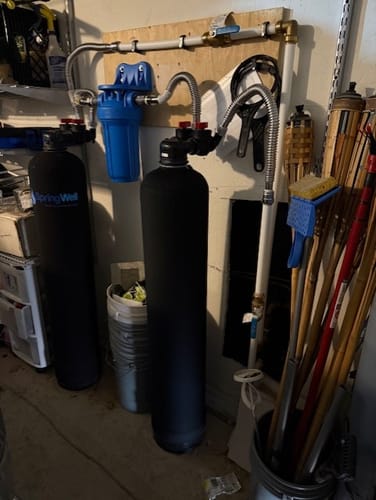
The Iron Master's performance has exceeded every expectation since installation three weeks ago. Using a digital TDS meter and iron test strips, I've documented the system's effectiveness across different usage scenarios and peak demand periods.
Baseline testing before installation confirmed our well water's 14.2 PPM iron content, along with noticeable hydrogen sulfide odor and elevated manganese levels around 0.8 PPM. Post-installation testing shows consistent iron reduction to below 0.1 PPM – essentially undetectable levels that meet even the most stringent water quality standards.
The air injection system operates automatically based on water demand. When I open any faucet, I can hear the quiet hum of the air compressor engaging, injecting compressed air into the incoming water stream. This oxidation process converts the dissolved ferrous iron to particulate ferric iron, which the Katalox media then captures through both mechanical and catalytic filtration.
Flow rate performance has been outstanding. Even during peak demand scenarios – simultaneous showers, dishwasher operation, and laundry washing – I measured consistent pressure readings of 52-54 PSI throughout the house. This represents only a 3-4 PSI reduction from our incoming municipal pressure, compared to the 15-18 PSI loss we experienced with the previous dual-filter system.
Water clarity improvement was immediately noticeable. The slight amber tint that characterized our well water completely disappeared, replaced by crystal-clear water that's indistinguishable from bottled water. The metallic taste that made coffee and tea nearly unpalatable has been entirely eliminated.
Most importantly, the staining issues that plagued our fixtures have stopped completely. New water spots on glassware dry clear without any orange discoloration. Our white laundry comes out genuinely white for the first time in years, and my wife no longer needs special rust-removing detergents.
The system's regeneration cycle occurs every 3-4 days based on our household's consumption patterns. Each backwash uses approximately 150 gallons and takes about 45 minutes to complete, typically running during early morning hours when water demand is minimal.
Daily Living Impact: The Transformation in Water Quality
The difference in our daily water experience has been nothing short of transformative. Simple activities that were previously frustrating due to iron contamination have become normal again, and some improvements caught us whole house water filter iron completely off guard.
My wife noticed the biggest change in her laundry routine. Previously, she separated whites from colors not just for bleaching, but because the iron-laden water would gradually turn white fabrics a dingy yellow-orange color. Now she can wash whites confidently, and they actually come out whiter than when we were using bottled water for the final rinse cycle.
Our morning coffee ritual has been revolutionized. The metallic, astringent taste that required us to use bottled water has completely disappeared. The coffee tastes clean and pure, with subtle flavor notes we never noticed before. Even our guests have commented on the improved taste of beverages served at our home.
Bathroom cleaning has become significantly easier. The persistent orange staining around toilet waterlines and in shower corners required weekly scrubbing with iron-specific cleaners. Those stains have stopped forming entirely, and existing stains gradually faded as clean water displaced the iron-contaminated residue in our plumbing system.
An unexpected benefit has been improved skin and hair condition. My daughter, who has sensitive skin, mentioned that her post-shower skin feels less dry and irritated. Research suggests that high iron content can affect soap performance and leave mineral deposits on skin and hair – improvements we're definitely experiencing.
Our dishwasher performance has improved dramatically. Those stubborn orange spots on glassware and dishes have completely disappeared, and we no longer need to add rinse aids or special detergents designed to combat mineral staining. Even our oldest glassware looks new again.
The elimination of iron-feeding bacteria has also reduced the biofilm buildup in our plumbing system, resulting in better overall water flow and reduced maintenance requirements for faucet aerators and showerheads.
Cost Analysis and Long-Term Value: Investment That Pays Dividends
Evaluating the Iron Master's financial impact requires considering both upfront costs and ongoing operational expenses compared to our previous situation. The numbers tell a compelling story about long-term value and cost recovery.
The system's purchase price of $2,847 initially seemed substantial, but context matters when dealing with iron levels as severe as ours. Our previous dual-filter setup cost $3,200 and failed to adequately solve the problem, requiring frequent media replacement and eventually complete system replacement after just four years of service.
Monthly operational costs are refreshingly minimal. The system uses approximately 150 gallons of water per regeneration cycle, occurring every 3-4 days based on our family's usage patterns. At Arizona's average water rates, this translates to roughly $8 monthly in additional water consumption for backwashing.
Electricity consumption is negligible – the control valve motor operates only during regeneration cycles, and the air compressor runs on-demand during water usage. I estimate total electrical costs at less than $3 monthly based on our utility rates and measured power consumption.
The Katalox media represents a significant long-term value advantage. Unlike traditional iron removal media that requires replacement every 3-5 years, Katalox typically lasts 10-15 years under normal operating conditions. At current replacement media costs of approximately $400, this represents substantial savings compared to conventional filtration systems.
Indirect savings have been equally impressive. We've eliminated our monthly bottled water expense of $80, and appliance maintenance costs have dropped significantly. Our water heater elements, which previously required annual replacement due to iron buildup, should now last their full rated lifespan of 8-10 years.
Calculating return on investment, the system should pay for itself within approximately 3.5 years through direct savings alone, not accounting for improved appliance longevity and reduced cleaning product costs.
Final Verdict: A Solution That Delivers on Its Promises
After three weeks of daily use, the SoftPro Iron Master has proven itself as the comprehensive solution I'd been seeking for our extreme iron contamination problem. The transformation from 14 PPM iron levels to undetectable amounts represents exactly the performance capability needed for Arizona well water conditions.
The system's greatest strength lies in its ability to handle severe iron contamination without compromising water pressure or requiring complex chemical feed systems. The air injection technology provides reliable oxidation, while the Katalox media delivers superior filtration capacity with minimal maintenance requirements.
Would I purchase this system again?
Absolutely, without hesitation. The combination of performance, reliability, and long-term value makes this investment worthwhile for any household dealing with significant iron contamination. The immediate improvement in water quality and elimination of ongoing frustrations justifies the upfront cost.
This system excels for households with iron levels between 5-15 PPM who want a single-tank solution that doesn't compromise water pressure. It's particularly well-suited for families who've struggled with inadequate filtration systems and need proven performance for severe contamination levels.
The Iron Master has restored confidence in our home's water quality and eliminated the daily reminders of iron contamination that affected everything from drinking water to laundry results. For the first time in years, we have water that performs like municipal-quality supply, despite coming from a challenging well source.
If you're dealing with iron levels above 3 PPM and want a permanent solution backed by solid engineering and reliable performance, the SoftPro Iron Master deserves serious consideration. It's an investment in water quality that delivers measurable, lasting results.