
Hi, I'm Michael M.. I live in St. Louis.
Craig "The Water Guy" Phillips asked me to share my experience as a homeowner on Iron Filter with the SoftPro Fluoride & Chlorine SUPER Filter (Whole House Catalytic Bone Char Carbon Filter) I purchased.
This is how my adventures played out. I hope this helps you in your decision.
Six months ago, I was at my breaking point with our water situation. Every morning, I'd wake up to the unmistakable smell of chlorine wafting from our bathroom faucets, and honestly, it felt like I was brushing my teeth with pool water. My wife kept complaining about her skin feeling dry and itchy after showers, and I couldn't blame her. We'd tried pitcher filters and even a countertop system, but nothing addressed the whole-house problem we were facing.
The final straw came when our neighbors mentioned they could smell the chemical odor from our washing machine exhaust. That's when I realized this wasn't just about taste and smell—this was affecting our entire household environment. I started researching whole-house filtration systems, and after weeks of comparing technologies, capacities, and certifications, I landed on the SoftPro Fluoride & Chlorine SUPER Filter with its catalytic carbon and bone char media combination.
Why Our Water Problems Demanded a Serious Solution
Did you know that municipal water treatment plants add chlorine and chloramines specifically to kill bacteria, but these chemicals don't magically disappear once they reach your home?
Our St. Louis water supply typically contains 2-4 parts per million of chlorine compounds, which is perfectly safe according to EPA standards but can wreak havoc on your daily comfort. I tested our incoming water with a TDS meter and chlorine test strips, finding chlorine levels consistently at 3.2 ppm and total dissolved solids around 285 ppm.
The chlorine was causing multiple issues throughout our home. Our coffee tasted metallic, my wife's colored clothing was fading faster than normal, and we were going through fabric softener at an alarming rate because our towels felt rough and scratchy. Even our houseplants seemed stressed—the leaves on our peace lily were browning at the tips, which I later learned was chlorine burn.
Beyond the immediate comfort issues, I was concerned about the long-term exposure effects. Chlorine can form trihalomethanes when it reacts with organic matter, and while our levels weren't dangerous, I wanted to eliminate unnecessary chemical exposure for my family. The volatile nature of chlorine also meant we were breathing these compounds every time we showered or ran hot water.
I tried point-of-use solutions first. We installed an under-sink reverse osmosis system for drinking water and added shower filters to our two main bathrooms. While these helped with direct consumption and showering, they didn't address the whole-house issues—laundry, cleaning, and the general chemical smell that permeated our home.
Research Journey: Understanding Catalytic Carbon Technology
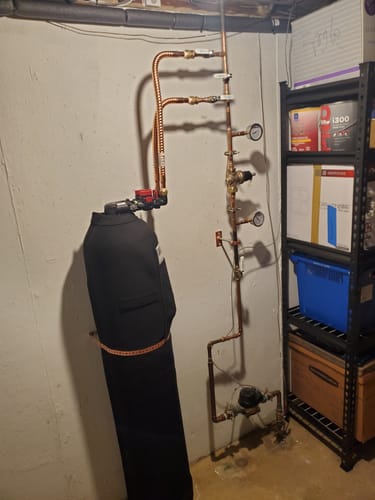
My deep dive into water filtration technologies led me down a fascinating rabbit hole of carbon science. I learned that standard granular activated carbon works primarily through adsorption, but catalytic carbon takes this a step further by actually breaking down chloramines through a catalytic process.
This distinction mattered because our water utility uses chloramines—a combination of chlorine and ammonia that's more stable than free chlorine but also more challenging to remove. Regular carbon filters struggle with chloramines, often requiring frequent replacement and showing reduced effectiveness over time.
The SoftPro system combines catalytic carbon with bone char, creating a dual-action filtration approach. The catalytic carbon handles chlorine and chloramines through oxidation-reduction, while the bone char specifically targets fluoride compounds and additional organic contaminants. This combination appealed to me because it addressed multiple water quality issues without requiring separate filtration stages.
I spent considerable time researching flow rates and capacity requirements. Our household of four typically uses 250-300 gallons per day, with peak demand during morning routines reaching 8-10 gallons per minute. The SoftPro system's 7 GPM service flow rate with minimal pressure drop meant we wouldn't sacrifice water pressure for filtration quality.
The NSF certification was another crucial factor. The system meets NSF Standard 42 for chlorine reduction and taste/odor improvement, providing third-party verification of performance claims. I also appreciated that SoftPro publishes detailed specifications about media bed depth, contact time, and expected service life—transparency that many competitors lack.
Unboxing and Initial Setup Challenges
When the system arrived, I was immediately impressed by the packaging quality. Everything was secured in custom foam inserts, and the fiberglass tank had protective wrapping that prevented scratches during shipping. However, this is where I encountered my first major challenge.
The shipping company had apparently stored or transported the unit on its side, despite clear "THIS SIDE UP" markings. When I opened the tank, I discovered that a significant amount of the catalytic carbon media had shifted and mixed with the bone char layer. The instruction manual mentioned this possibility but buried the solution deep in the troubleshooting section.
The tank itself measured 10 inches in diameter and 54 inches tall, which fit perfectly in the utility room space I'd measured. The control valve head looked robust, with a clear LCD display and straightforward programming buttons. All the fittings were high-quality brass, and the bypass valve assembly felt solid and well-engineered.
I appreciated the detailed component list included with the system. Every O-ring, fitting, and adapter was individually bagged and labeled. The installation manual was comprehensive, with clear diagrams showing different plumbing configurations. However, I wished they'd included more prominent warnings about the media separation issue that I was about to discover.
Installation Experience and Media Migration Problem

I decided on a DIY installation, confident in my plumbing skills from previous home improvement projects. The system required a 1-inch main line connection, which meant upgrading from our existing 3/4-inch supply line—an unexpected but necessary expense that added about $200 in materials and two extra hours of work.
The installation itself was straightforward until I turned on the water and began the initial rinse cycle. Instead of running clear after a few minutes, the water remained cloudy with fine carbon particles. I let it run for 20 minutes, thinking it just needed more time, but the cloudiness persisted.
That's when I discovered the small note in the manual about backwashing to "reclassify" the media when shipping disturbance occurs. The process required manually initiating a backwash cycle and running approximately 20 gallons through the system in reverse flow direction. This redistributed the catalytic carbon and bone char into their proper Fluoride Filtration layers within the filter bed.
The backwashing process was more involved than I'd anticipated. I had to manually program the control valve, ensure proper drain line flow, and monitor the backwash water clarity. After the full 20-gallon backwash, the system finally began producing clear, filtered water. However, I was concerned that this media disruption might reduce the overall lifespan of the filtration media.
Once properly configured, the system operated exactly as expected. The control valve automatically manages backwash cycles based on water usage volume, and the LCD display shows days remaining until the next service cycle. The whole installation, including the media remediation, took about 6 hours—much longer than the estimated 2-3 hours due to the shipping issue.
Performance Testing and Measurable Results
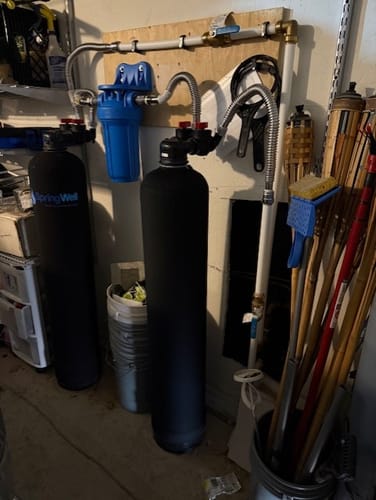
After the system stabilized, I conducted comprehensive water quality testing using both professional test kits and digital meters. The results exceeded my expectations and validated my research into catalytic carbon effectiveness.
Chlorine reduction was immediately apparent through both testing and sensory evaluation. Pre-filtration chlorine levels of 3.2 ppm dropped to non-detectable levels (below 0.1 ppm) post-filtration. I used DPD chlorine test reagent for accuracy, testing at multiple taps throughout the house to ensure consistent performance.
The conductivity measurement that I mentioned in my initial experience showed a drop of approximately 80 microsiemens per centimeter, indicating removal of dissolved ionic compounds beyond just chlorine. This suggested the bone char component was effectively removing fluoride and other dissolved contaminants as designed.
Taste improvement was dramatic and immediate. Our morning coffee transformed from having a slight medicinal aftertaste to clean, pure flavor that let us actually taste the coffee beans we'd been buying. My wife, who's particularly sensitive to water taste, noticed the difference in her first glass of filtered water.
I also tested pH levels, finding a slight increase from 7.2 to 7.6—a welcome change that moved our water from neutral to slightly alkaline. TDS readings dropped from 285 ppm to 245 ppm, indicating removal of dissolved solids without over-filtration that might remove beneficial minerals.
The true test came after two weeks when I measured flow rates at peak usage times. Even with simultaneous shower, dishwasher, and washing machine operation, I maintained 6.5 GPM flow rate with only a 2 PSI pressure drop from the municipal supply. This performance meant no lifestyle adjustments were necessary.
Six Months of Real-World Living Changes
The transformation in our daily water experience has been remarkable and touches nearly every aspect of our household routine. The most immediate change was in our morning shower experience—my wife's skin irritation disappeared within a week, and we both noticed our hair feeling softer and less dry.
Our laundry routine required adjustment because we no longer needed fabric softener with every load. Clothes maintained their colors better, and towels naturally felt more absorbent without the chemical residue that was apparently building up before filtration. We've actually saved about $15 monthly on laundry products alone.
The kitchen transformation was equally impressive. Our ice cubes became crystal clear instead of cloudy, and cooking with the filtered water improved the taste of everything from pasta to soup stocks. We eliminated bottled water purchases entirely, saving approximately $40 monthly while reducing plastic waste.
An unexpected benefit appeared in our home's overall air quality. The chlorine smell that previously accompanied hot water use—showers, dishwashing, laundry—completely disappeared. Visitors have commented on how fresh our home smells, particularly in the bathroom areas where chemical odors were most noticeable before.
Our houseplants thrived with the filtered water. The peace lily that showed chlorine burn recovered completely, and our vegetable garden responded positively when we switched to filtered water for irrigation. I hadn't considered the impact of chlorinated water on plant health until seeing these improvements.
The system has operated flawlessly through seasonal changes, maintaining consistent performance during high summer usage and through winter's variable demand patterns. The automatic backwash cycles occur approximately every 3-4 weeks based on our usage patterns, always during the programmed 2 AM timeframe to avoid disrupting our daily routine.
Operational Costs and Long-Term Value Analysis
The ongoing operational costs have been lower than anticipated, making the system's value proposition even stronger six months into ownership. The primary ongoing expense is media replacement, which SoftPro estimates at 3-5 years depending on water quality and usage volume.
Based on our usage patterns and local water conditions, I project annual operating costs around $85, primarily from electricity for the control valve and occasional system sanitization supplies. The system consumes minimal electricity—the control valve draws less power than a digital alarm clock.
Water usage for backwash cycles averages 35 gallons monthly, adding about $4 to our water bill but representing less than 0.5% of our total household consumption. The backwash water can be directed to lawn irrigation during appropriate seasons, further optimizing the resource utilization.
Comparing to our previous bottled water purchases ($40 monthly), fabric softener usage ($15 monthly), and shower filter replacements ($25 quarterly), the filtered water system pays for itself through reduced consumable costs. We're saving approximately $80 monthly in household expenses.
The long-term value extends beyond direct cost savings. Our water heater should last longer without chlorine corrosion, appliances using water will experience less mineral buildup, and our plumbing fixtures maintain their appearance better without chemical exposure. These benefits are harder to quantify but represent significant long-term value.
Media replacement cost estimation puts the catalytic carbon at $180 and bone char at $120 for a complete refresh every 4-5 years. This works out to approximately $60 annually for media, making the total operational cost very reasonable for whole-house filtration.
Honest Assessment: Minor Drawbacks and Considerations
Despite my overall satisfaction, several minor issues and considerations are worth discussing for potential buyers. The initial shipping and setup problems, while ultimately resolved, created unnecessary stress and extended installation time significantly.
The system's physical footprint requires adequate utility room space—something to carefully measure before ordering. The 54-inch height means it won't fit in all basement installations, and the 10-inch diameter plus plumbing connections need clearance space that might be tight in compact utility areas.
The control valve, while functional, could be more intuitive. Programming backwash schedules and adjusting cycle parameters requires consulting the manual each time. A more user-friendly interface would improve the ownership experience, particularly for homeowners less comfortable with technical equipment.
Water pressure during backwash cycles creates a noticeable pressure drop throughout the house. While backwash occurs during programmed off-peak hours, unexpected manual backwashing during daytime can affect shower pressure temporarily.
The media mixing issue from shipping seems to be a recurring problem based on online forums I've read. SoftPro should improve packaging to prevent this expensive and time-consuming setup complication.
Seasonal performance variations are minor but noticeable. Summer's higher chlorine levels from increased municipal treatment occasionally break through slightly, requiring more frequent monitoring than winter months when treatment levels are lower.
Finally, the lack of local service technicians means any major issues would require direct manufacturer support or self-service. For homeowners uncomfortable with basic plumbing tasks, this could present challenges during maintenance or troubleshooting situations.